

A clean hot tub is more inviting, more comfortable, and easier to maintain. Regular cleaning removes body oils, cosmetics, dirt, and other contaminants that can affect the water, filters, and spa surfaces.
While routine water care keeps your hot tub ready between uses, it cannot remove everything that accumulates over time. Periodically draining and deep-cleaning your spa gives you an opportunity to clean the plumbing, shell, filters, cover, and cabinet before starting again with fresh water.
The following steps apply to many portable hot tubs. In-ground spas, inflatable hot tubs, saltwater systems, and individual models may require different procedures. Always follow your owner’s manual, product labels, and warranty requirements.
What You’ll Need
Gather your supplies before you begin:
- A plumbing-line flush approved for hot tubs
- A garden hose
- A spa-surface cleaner
- Soft cloths or nonabrasive sponges
- A filter-cleaning product, if needed
- A cover cleaner approved for your cover material
- The appropriate cleaner for your spa cabinet
- A water-testing kit or test strips
- Your regular water-care products
Avoid using household cleaners unless your spa manufacturer specifically approves them. Abrasive products and cleaners that leave residue may damage spa surfaces, create foam, disrupt water chemistry, or affect warranty coverage.
1. Flush the Plumbing Lines
Even when the water looks clean, oils and residue can accumulate inside the plumbing. A spa plumbing flush can help loosen this buildup before the water is drained.
With the spa filled and circulating, add a line-flush product approved for your hot tub. Follow the product label exactly for the correct amount and circulation time.
Foam or dark residue may appear as buildup leaves the plumbing. This can be normal, but check the product directions or contact your spa professional if anything concerns you.
2. Turn Off Power to the Hot Tub
After completing the line flush, switch off power to the spa at the breaker before draining it. Operating pumps or heaters without enough water can damage the equipment.
Allow the water to cool if required by your owner’s manual or local water-disposal rules.
3. Drain the Hot Tub
Locate the spa’s drain fitting and follow the instructions in your owner’s manual. On many models, you can attach a garden hose to the drain and direct the water to an approved discharge location.
Drainage requirements vary by community. Chemically treated spa water may not be allowed in streets, storm drains, natural waterways, yards, or septic systems. Check your state and local rules before releasing the water.
Once the spa is empty, close and secure the drain fitting according to the manufacturer’s instructions.
4. Clean the Hot Tub Filters
Remove the filters and rinse between the pleats with clean water from a garden hose. Avoid pressure washers and high-pressure nozzles, which may damage the filter material.
For a deeper cleaning, use a filter-cleaning product recommended by the spa or filter manufacturer. Follow its directions for soaking and rinsing.
Inspect each filter for tears, cracks, discoloration, or material that remains clogged after cleaning. Replace damaged or worn filters rather than reinstalling them.
5. Clean the Hot Tub Cover
Use a soft cloth and a cleaner approved for your cover’s material. Clean the top, sides, and underside according to the cover manufacturer’s directions, then allow the cover to dry.
Avoid harsh chemicals or abrasive brushes. Inspect the cover for cracking, waterlogging, damaged stitching, or mildew that returns after cleaning.
6. Clean the Hot Tub Shell
Remove any remaining water from the footwell with a wet/dry vacuum, small container, or absorbent cloth.
Apply a nonabrasive spa-surface cleaner approved for your shell. Wipe the seats, footwell, waterline, pillows, and areas around the jets with a soft cloth or sponge. Pay particular attention to any visible waterline ring or residue.
Rinse or wipe the shell thoroughly so no cleaning product remains. Do not use stiff brushes, scouring pads, or general-purpose household cleaners unless your manufacturer confirms they are safe.
If you plan to apply a spa polish or protectant, first verify that it is suitable for your shell and will not make seating or entry surfaces slippery.
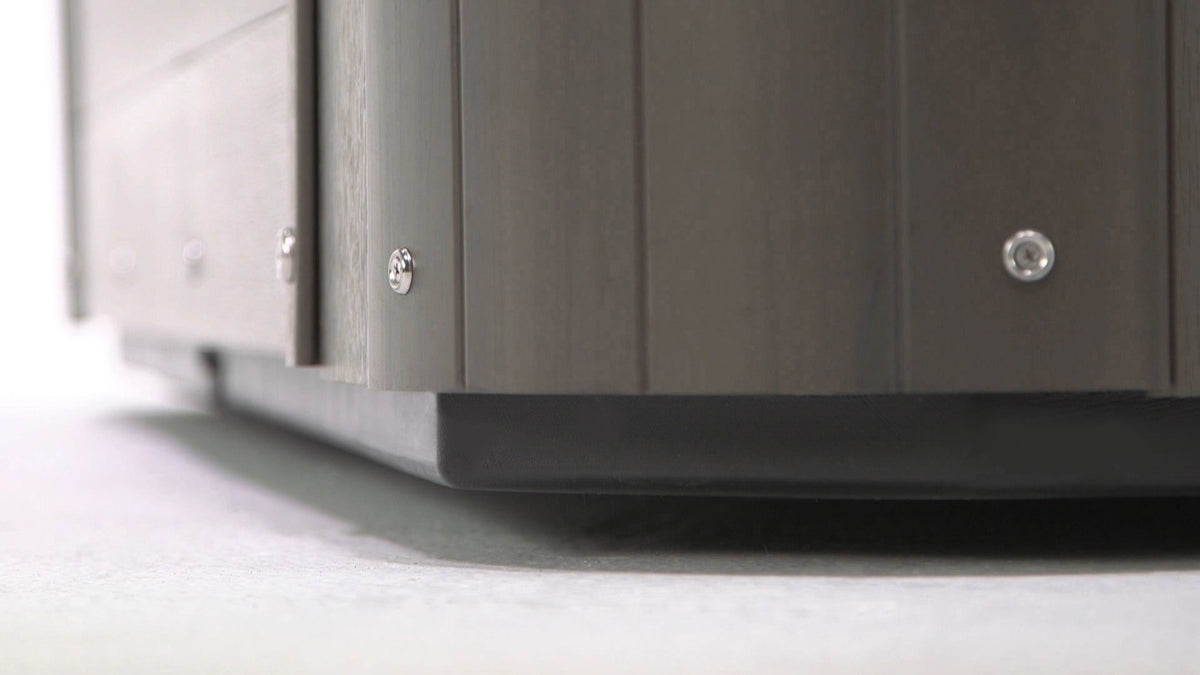
7. Clean the Spa Cabinet
The correct cleaning method depends on the cabinet material.
- Synthetic or resin cabinets: Wipe with water, a soft cloth, and an approved mild cleaner.
- Wood cabinets: Use a product intended for the specific type and finish of wood.
- Painted or coated cabinets: Follow the manufacturer’s care instructions to avoid fading or damaging the finish.
This is also a good opportunity to clear leaves and debris from around the equipment area. Do not spray water into vents or electrical compartments.
8. Refill the Hot Tub
Confirm that the drain is closed, reinstall the clean filters as directed, and refill the spa using the procedure in your owner’s manual.
Some manufacturers recommend placing the hose in a designated filter compartment or fill pipe to reduce the chance of trapped air in the plumbing. Because the correct fill point varies, follow the instructions for your model.
Fill the spa to its recommended level before restoring power. Never run the pumps or heater while the water level is too low.
9. Restore Power and Balance the Water
Once the spa is full, restore power and start the system according to your owner’s manual. Check that water is circulating normally and inspect the equipment area for leaks.
Test the water, then adjust alkalinity, pH, sanitizer, hardness, and any other required levels in the order recommended for your water-care system. Never mix spa chemicals, and always follow their labels.
Wait until the water reaches the manufacturer’s recommended operating ranges before using the hot tub.
How Often Should You Clean a Hot Tub?
The ideal schedule depends on spa usage, water-care system, bather load, and manufacturer recommendations. As a general starting point:
- Test and adjust the water routinely and before use.
- Rinse filters regularly and deep-clean them as directed.
- Wipe away visible waterline residue promptly.
- Clean and inspect the cover every few months.
- Drain, clean, and refill many chlorine- or bromine-treated spas approximately every three to four months.
Heavy use, persistent foam, cloudy water, or difficult-to-balance chemistry may mean the spa needs attention sooner.
Clean Water Starts with Consistent Care
Deep-cleaning your hot tub takes a little time, but it helps keep the spa welcoming and makes ongoing water care easier. Following a regular maintenance schedule can also reduce buildup and help you notice worn components before they become larger problems.
When in doubt, consult your owner’s manual or contact a qualified spa professional for guidance specific to your hot tub.


Share:
Why You Need a Hot Tub Cover
What is a Hot Tub Base Upgrade?