

A hot tub must circulate, filter, and heat hundreds of gallons of water throughout the year. That requires energy, but it does not mean you should pay for avoidable heat loss or unnecessary equipment operation.
A properly fitted cover, sensible temperature settings, clean filters, and correctly programmed controls can help your spa operate more efficiently. The amount you save will depend on your climate, utility rates, spa model, insulation, condition, temperature setting, and usage habits.
Start with the steps that prevent heat from escaping.
1. Use a Well-Fitting Insulated Cover
Most heat leaves a hot tub through the exposed water surface. Covering the spa when it is not in use reduces heat loss and evaporation while helping keep leaves, dirt, and other debris out of the water.
An effective cover should:
- Match the spa’s dimensions and corner radius
- Sit evenly around the entire perimeter
- Seal without large gaps or lifted edges
- Contain dry, intact insulation
- Have a working vapor barrier
- Close securely around the hinge
- Direct rainwater away from its surface
Fasten the locking straps after every use. Although locking straps may discourage unauthorized access, a cover should be combined with appropriate barriers and supervision wherever children are present.
Inspect the cover regularly for:
- Sagging or warping
- Increasing weight
- Cracked or brittle material
- Exposed foam
- Damaged seams or hinges
- Broken straps and clips
- Gaps around the spa
A waterlogged or misshapen cover may no longer insulate effectively, even if it still covers the water. Replace it when its condition prevents a secure fit or proper seal.
Remove snow carefully with a soft broom before it becomes excessively heavy. Never sit, stand, or place heavy objects on a standard spa cover.
2. Keep the Cover Closed
Even an excellent cover cannot retain heat while it is folded back.
Close the spa promptly after every soak and avoid leaving it uncovered while the water heats. If you need to add chemicals, follow the product label and owner’s manual regarding how long the cover should remain open for ventilation.
A cover lifter can make opening and closing easier while reducing the likelihood that the cover will be dragged, dropped, or damaged.
Keeping the cover closed also limits evaporation. That means less replacement water must be added and heated.
3. Choose a Practical Water Temperature
The warmer the water is compared with the surrounding air, the faster heat can escape. Setting the spa slightly lower may reduce heat loss, particularly during cold or windy weather.
Choose the lowest temperature that remains comfortable for your normal use. You can raise it before a planned soak if needed, allowing enough time for the spa to reach the desired setting.
Do not repeatedly adjust the thermostat without understanding your spa’s recovery time. Heating speed depends on:
- Heater capacity
- Water volume
- Starting temperature
- Outdoor temperature
- Cover condition
- Electrical configuration
- Insulation
The water temperature should never exceed the manufacturer’s limit or 104°F, whichever is lower.
4. Learn Your Spa’s Heating Modes
Hot tub control systems do not all use the same terminology or operate in the same way. Review your model’s owner’s manual before changing its settings.
Depending on the control system, you may see modes such as:
Ready or Standard Mode
Ready or Standard mode is designed to keep the water close to the selected temperature. The system checks the water regularly and heats as needed.
This mode may be appropriate when:
- You use the spa frequently
- You want it ready without advance planning
- You are initially heating fresh water
- Your climate or routine makes consistent temperature important
Because the system prioritizes constant readiness, it may use more energy than a mode that allows the temperature to fall between heating cycles.
Rest or Economy Mode
Rest or Economy mode generally limits heating to programmed filtration cycles. The water may cool between those cycles, so the current temperature may be lower than the selected setting.
This mode may work well when:
- You use the spa on a predictable schedule
- You can coordinate filtration with your normal soaking time
- You do not need the water maintained at full temperature all day
- You are comfortable planning ahead
Some MyHotTub control systems also offer Ready-in-Rest operation, which temporarily heats after the primary jet pump is activated.
Sleep Mode or Low Temperature Range
Some systems include Sleep mode or a separate low temperature range for longer periods of reduced use.
These settings may allow the water temperature to fall further while maintaining some circulation or freeze protection. They should not be confused with turning the spa off.
Control-panel names, temperature limits, and equipment behavior vary. Do not assume that a setting described for another hot tub will work the same way on yours.
5. Program Filtration Carefully
Filtration keeps water moving through the filter and supports water quality, but unnecessarily long pump cycles can waste electricity.
Use the filtration duration recommended in your owner’s manual as a starting point. Adjust it only when necessary based on:
- Frequency of use
- Number of bathers
- Water clarity
- Sanitizer demand
- Local climate
- Whether the spa has a dedicated circulation pump
- Supplemental systems such as ozone
Some MyHotTub controls allow one or two programmable filter cycles. If you use Rest or Economy mode, schedule a filtration period so the spa can heat before your usual soaking time.
Do not shorten filtration solely to reduce electricity use if water quality or circulation suffers. Efficient operation still requires adequate filtration and sanitation.
6. Clean the Filter Regularly
A clogged filter restricts water flow. Reduced flow can make the circulation system work harder and may contribute to heating or flow-related errors.
Inspect the filter regularly and follow the cleaning schedule in your owner’s manual.
Typical maintenance includes:
- Rinsing away loose debris with a garden hose
- Cleaning between the pleats
- Periodically using a manufacturer-approved filter cleaner
- Allowing a cleaned filter to rinse thoroughly before installation
- Replacing cartridges that are damaged, frayed, collapsed, or no longer clean properly
Avoid household detergents, pressure washers, and stiff tools that can damage filter material or leave residue behind.
A filter removes physical debris; it does not make the water germ-free. Proper sanitizer levels, balanced water, and adequate circulation are still essential.
Keeping a spare compatible filter allows you to continue normal operation while another cartridge is being deep-cleaned.
7. Close the Air Controls After Soaking
Hot tub air controls introduce air into the jet stream to create a stronger, more vigorous massage.
In cool conditions, that incoming air can lower the water temperature and increase the amount of heating required. Turn the air controls off when the spa is covered and not being used, unless your owner’s manual directs otherwise.
Air controls are different from plumbing gate valves.
Never close the equipment-compartment gate valves during normal operation. Those valves must remain in their required open position so water can circulate through the pumps and heater.
If you are uncertain which controls are which, consult the owner’s manual or contact Customer Service before adjusting them.
8. Maintain the Correct Water Level
A low water level can allow air into the filtration system, interrupt circulation, and potentially cause an air lock. An overfilled spa may lose water when people enter, wasting water and the energy used to heat it.
Maintain the water level specified in your owner’s manual. On many spas, that means keeping the water above the highest standard jet while leaving enough room for displacement.
Check the level regularly, especially during:
- Hot or dry weather
- Periods of frequent use
- Extended operation with the cover open
- Times when splashing is common
Frequent unexplained water loss may indicate a leak rather than normal evaporation.
9. Repair Leaks and Circulation Problems Promptly
A plumbing leak wastes both heated water and treatment chemicals. A circulation problem may prevent the heater from operating efficiently—or from operating at all.
Investigate:
- Unexplained drops in water level
- Wet areas around the spa
- Dripping equipment unions
- Persistent flow errors
- Weak circulation
- Pumps that sound unusual
- Heating times that suddenly increase
- A noticeable rise in electricity use
Turn off the spa and contact a qualified technician if water is leaking near electrical equipment or if you cannot identify the cause safely.
Small maintenance problems can become expensive when the spa continues losing water or struggling to circulate.
10. Keep the Cabinet and Insulation Intact
The spa’s cabinet, base, and internal insulation help limit heat loss and protect its plumbing.
After service or inspection, reinstall every exterior panel correctly. A loose, missing, or damaged panel may expose the equipment area to cold air, moisture, pests, and debris.
Inspect visible insulation for damage, but do not add aftermarket insulation around equipment without manufacturer approval. Pumps, controls, and other components may require specific clearances, ventilation, and service access.
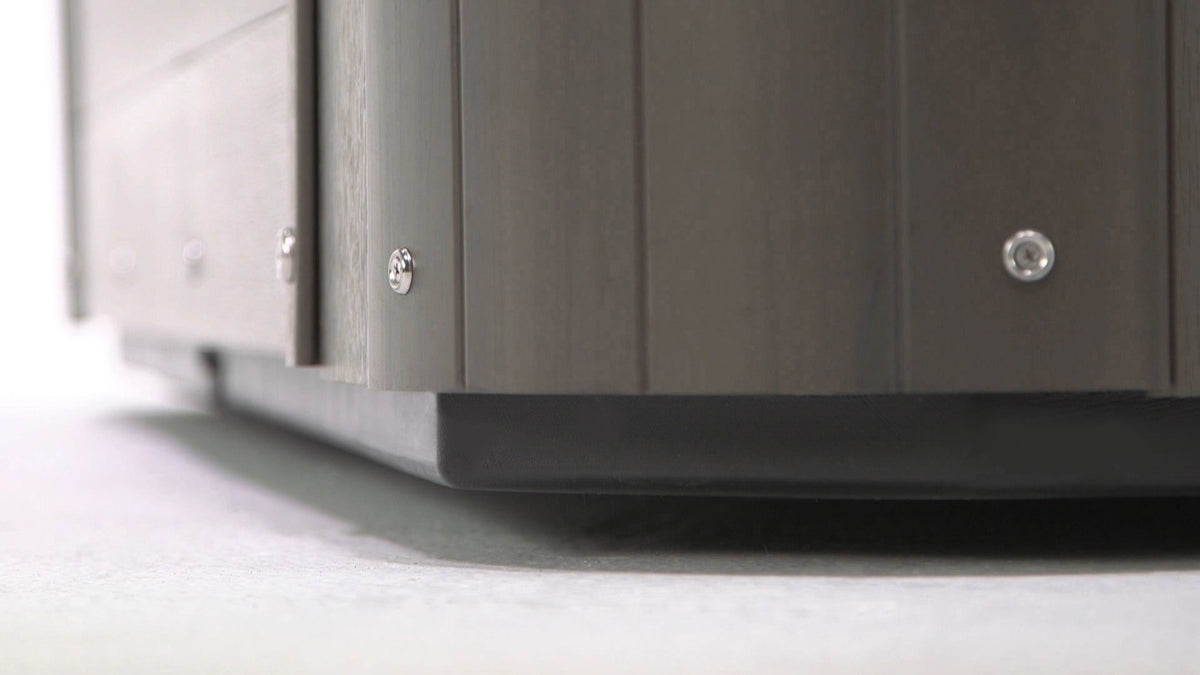
MyHotTub also offers a base upgrade on compatible acrylic models for buyers who want additional closed-cell foam insulation beneath the spa. Actual energy savings will vary with the installation and operating conditions.
11. Reduce Exposure to Cold Wind
Wind moving across the spa and around the cabinet can accelerate heat loss, particularly when the cover is open.
When planning an installation, natural or constructed wind protection may help. Options can include:
- Privacy screens
- Fencing
- Landscaping
- A pergola or shelter designed for spa use
Do not block the service panel, required electrical clearances, ventilation, drainage, or emergency access. Follow all manufacturer instructions and local requirements.
Sun exposure may provide some warmth, but excessive ultraviolet exposure can shorten the life of the cover and other materials. Balance protection from wind with shade and accessibility.
12. Use the Jets Only as Long as Needed
High-speed jet pumps use more electricity than low-speed filtration or circulation equipment.
Enjoy the jets during your soak, but turn them off when you are finished rather than restarting unnecessary cycles. Many control systems shut the jets off automatically after a set period.
Do not disable required circulation, filtration, heating, sanitation, or freeze-protection functions to save electricity.
13. Plan Carefully for Vacations and Seasonal Shutdowns
If you will be away briefly, a lower temperature range or energy-saving mode may reduce consumption while preserving circulation and freeze protection.
For a longer shutdown, follow the model-specific procedure in the owner’s manual. In freezing climates, a filled spa should not simply be switched off. Frozen water can expand inside the plumbing and cause extensive damage.
A spa that will remain out of service may need to be drained and professionally winterized. Proper winterization involves removing water from pumps, heaters, jets, and plumbing—not merely draining the visible water from the shell.
14. Track Changes in Energy Use
Energy use varies from month to month with weather, temperature settings, and usage. Look at trends rather than judging performance from a single utility bill.
Keep a simple record of:
- Water-temperature setting
- Heating mode
- Filtration schedule
- Average outdoor temperature
- Frequency of use
- Cover condition
- Monthly electricity use
If consumption rises unexpectedly, check the cover, filter, water level, controls, leaks, and circulation before assuming the heater has failed.
Any electrical monitoring equipment for a hardwired spa should be selected and installed by a qualified electrician. Do not open electrical panels or modify spa wiring to measure consumption yourself.
What Affects Hot Tub Energy Costs?
No single savings estimate applies to every owner. Operating cost is influenced by:
- Local electricity rates
- Outdoor temperature and wind
- Desired water temperature
- Spa size and water capacity
- Cover fit and insulation
- Cabinet and base insulation
- Frequency and length of use
- Filtration programming
- Pump and heater configuration
- Water-care practices
- Equipment condition
The most effective energy-saving strategy is usually a combination of preventing heat loss and programming the spa around the way you actually use it.
Hot Tub Energy-Efficiency Checklist
For a quick review:
- Keep the spa covered whenever it is not in use.
- Fasten the cover securely and inspect its seal.
- Replace a damaged or waterlogged cover.
- Use the lowest comfortable water temperature.
- Select the heating mode appropriate for your schedule.
- Program only the filtration your spa and water conditions require.
- Clean and replace filters as needed.
- Close the air controls after soaking.
- Keep all required gate valves open.
- Maintain the correct water level.
- Repair leaks and flow problems promptly.
- Secure the cabinet panels after service.
- Use jets only when needed.
- Use a vacation setting or proper winterization for extended absences.
- Review your utility usage for unexpected changes.
Small adjustments may not transform one electricity bill, but together they can reduce avoidable energy use while keeping your hot tub clean, protected, and ready when you want it.
Learn more:
How to Know When to Replace Your Hot Tub Cover

Share:
How to Connect Your Hot Tub Bluetooth Stereo