
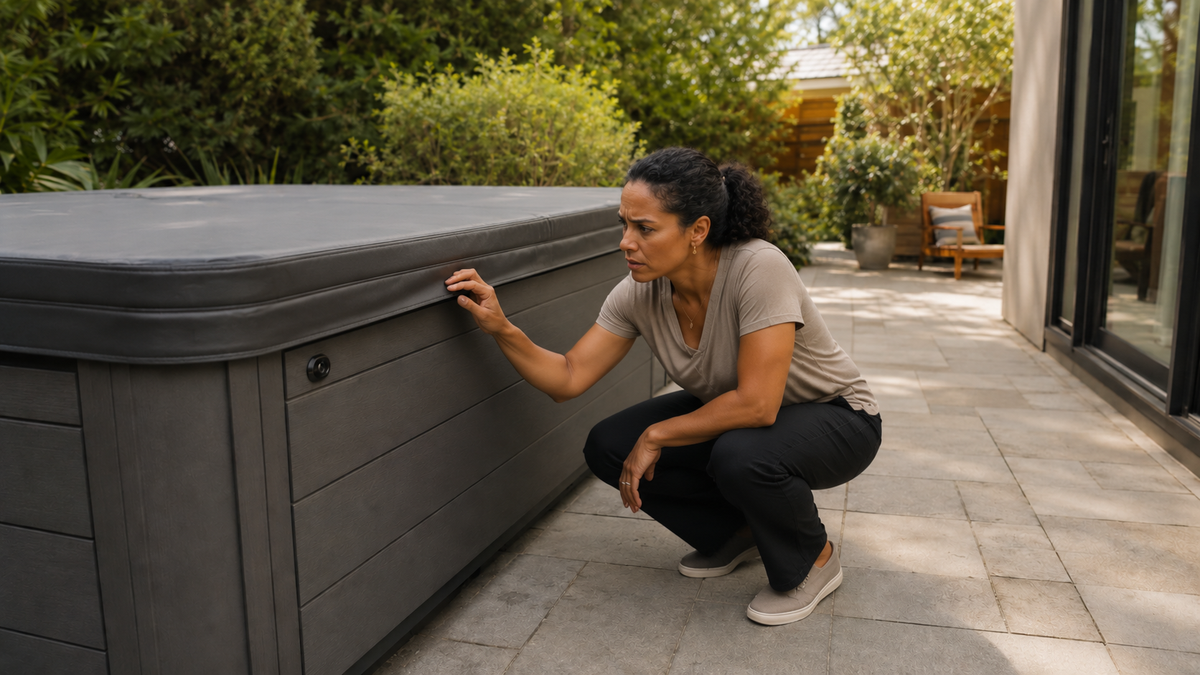
How to Know When to Replace Your Hot Tub Cover: 5 Signs
A hot tub cover works every day, even when you aren’t using your spa. It retains heat, limits evaporation, keeps debris out of the water, and helps protect the hot tub from weather.
Exposure to sunlight, moisture, temperature changes, snow, and spa-treatment vapors will eventually take a toll. Rather than relying on the cover’s age alone, inspect it regularly for physical changes that affect its fit, insulation, and safe operation.
Here are five common signs that it may be time for a replacement.
Why Is a Hot Tub Cover Important?
A properly fitted, insulated cover provides several valuable benefits:
- Reduces heat loss: A tight seal helps the spa maintain its selected temperature with less reheating.
- Limits evaporation: Covering the water reduces moisture loss between uses.
- Keeps out debris: Leaves, sticks, insects, and windblown dirt are less likely to enter the water or reach the filter.
- Protects the spa: The cover helps shield the shell and water from weather and sunlight.
- Helps secure access: Locking straps can discourage unauthorized entry when used with appropriate safety barriers and supervision.
A damaged cover may continue to sit on top of the spa while no longer performing these jobs effectively.
1. The Cover Sags or Warps
A healthy cover should fit evenly across the top of the spa and direct rainwater away from its surface.
If the middle begins to sag—a condition sometimes called cupping—water and snow can collect in the low area. The additional weight may worsen the damage and lift the cover’s edges away from the spa.
A poor seal allows more heat and water vapor to escape. Replace or professionally evaluate the cover if it:
- Has a noticeable dip in the middle
- Collects standing water
- No longer sits flat
- Has curled or lifted corners
- Allows visible gaps around the spa
Remove snow promptly with a soft broom. Never sit, stand, or place heavy objects on a standard hot tub cover.
2. The Cover Feels Unusually Heavy
An increasingly heavy cover is one of the clearest signs of waterlogging.
Most insulated covers contain foam cores protected by a vapor barrier. If that barrier fails, the foam can absorb moisture. A waterlogged cover becomes difficult to lift and may lose some of its insulating ability.
Waterlogged foam generally cannot be restored through surface cleaning. If the cover has become significantly heavier, sags under its own weight, or drips from inside the core, replacement is usually the best option.
Use care when moving a heavy cover. Ask for help or use a compatible cover lifter to avoid injury or additional damage.
3. The Material Is Torn, Cracked, or Brittle
Sunlight, weather, rough handling, and age can weaken the cover’s exterior. Inspect the top, underside, hinge, skirt, handles, and seams for:
- Cracks or tears
- Brittle or flaking material
- Open or weakened seams
- Exposed foam
- Damaged hinges
- Loose stitching
- Worn handles
A small superficial tear may be repairable if the foam and vapor barrier remain dry and intact. Extensive cracking, exposed foam, or structural damage usually calls for a new cover.
A cover lifter can help prevent damage caused by dragging, dropping, or storing the cover on a rough surface.
4. The Cover Has a Persistent Odor
A musty or unpleasant odor may indicate mildew or microbial growth on or inside the cover.
First, clean the cover using products and methods approved for its material. Allow both sides to dry completely, then determine whether the odor comes from the cover or the spa water.
Replacement may be necessary when:
- The smell remains after cleaning and drying
- Mildew repeatedly returns
- Moisture is trapped inside the foam
- The vapor barrier has failed
- The underside is deteriorating or discolored
Persistent internal moisture is different from removable surface dirt. Once contamination reaches a waterlogged foam core, surface cleaning may not solve the problem.
5. The Straps, Locks, or Handles Are Broken
Fastening straps help keep the cover positioned correctly and discourage unauthorized access. Inspect every strap, clip, lock, anchor, and handle.
A broken clip or strap may be replaceable without purchasing an entirely new cover. Contact the cover manufacturer to determine whether compatible hardware is available and whether the repair is covered by warranty.
Replace the complete cover when:
- Multiple straps or attachment points have failed
- The surrounding material is torn or weakened
- The cover no longer fits securely
- Structural damage prevents safe handling
- Replacement hardware cannot be attached properly
Never rely on a damaged cover as the only barrier between children and an unattended spa. Follow local requirements for fences, gates, alarms, or other access controls, and provide active adult supervision whenever children are nearby.
How Long Does a Hot Tub Cover Last?
There is no universal replacement age. Cover life depends on:
- Material and construction quality
- Climate and sun exposure
- Snow and rainfall
- Water chemistry
- Frequency of use
- Cleaning and conditioning
- How the cover is removed and stored
A well-maintained cover may last for years, while a cover exposed to harsh conditions or improper handling may need replacement sooner. Inspecting it monthly is more useful than replacing it according to a fixed calendar.
How Much Does a Replacement Hot Tub Cover Cost?
Replacement cost depends on the spa’s size and shape, insulation, taper, material, safety rating, customization, and shipping requirements.
Avoid choosing a cover based on price alone. An incorrectly sized or poorly insulated cover may not seal properly, retain heat effectively, or meet your safety needs.
When comparing replacement covers, consider:
- Exact dimensions and corner radius
- Foam thickness and density
- Taper for rainwater runoff
- Vapor-barrier construction
- Exterior material
- Hinge reinforcement
- Locking straps
- Warranty coverage
- Freight or delivery charges
See our selection of hot tub covers to find a model-specific replacement and view current pricing.
How to Make Your Hot Tub Cover Last Longer
A few simple habits can help prevent premature damage:
- Clean the cover using products approved for its material. Learn how here.
- Remove leaves, snow, and standing water promptly.
- Keep the spa water properly balanced.
- Follow product directions about venting the spa after adding chemicals.
- Use a cover lifter rather than dragging the cover.
- Never sit, stand, or place heavy objects on it.
- Keep locking straps fastened when the spa is unattended.
- Repair minor exterior damage before moisture reaches the foam.
- Inspect the cover monthly for changes in weight, shape, and fit.
Repair or Replace?
Replace the cover if its foam is waterlogged, its structure is sagging, it no longer seals, or damage prevents it from being secured safely.
Minor issues such as a replaceable clip or a small exterior tear may be repairable when the foam and vapor barrier remain undamaged. If you are uncertain, contact the cover manufacturer or MyHotTub Customer Service before continuing to use it.
A replacement cover is an investment in cleaner water, better heat retention, and easier hot tub ownership.


Share:
How to Prepare Your Hot Tub Before Vacation
How to Choose a Hot Tub: Complete Buyer’s Guide