
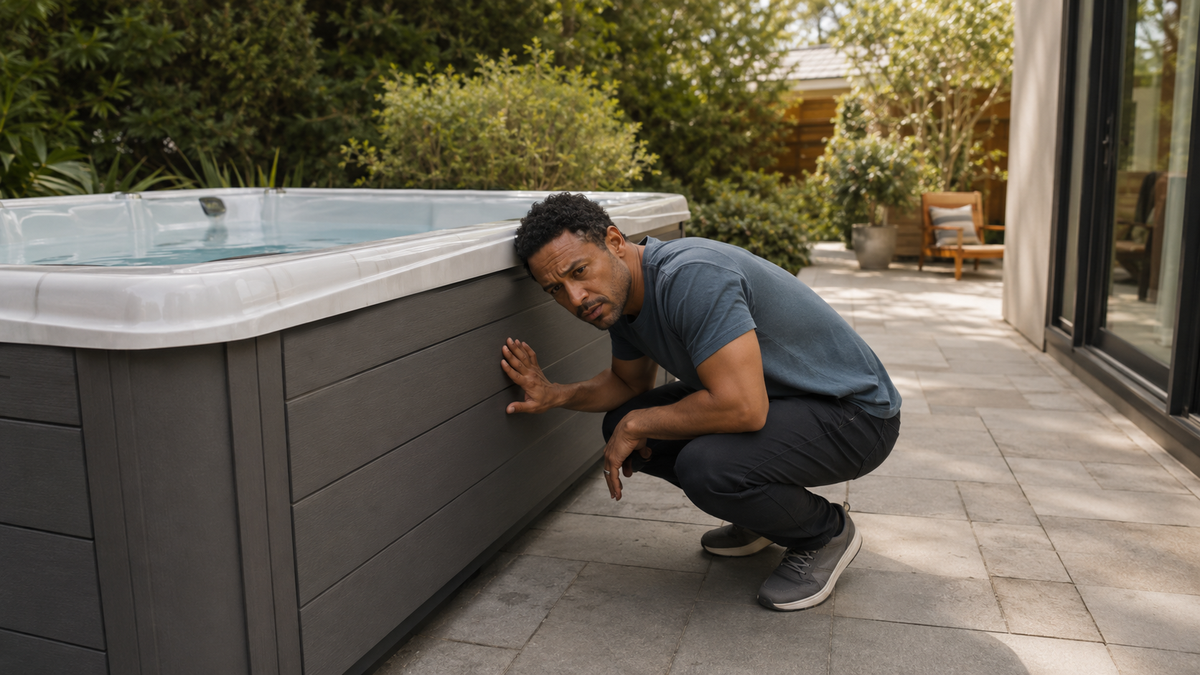
Hot tubs make several sounds during normal operation. You may hear the low hum of a circulation pump, the rush of water through the jets, or an occasional click when a relay activates.
A new, unusually loud, or persistent noise deserves attention, however. It may indicate a simple water-flow problem, a loose component, or an issue requiring professional service.
The sound itself can provide a helpful clue, but it should not be treated as a final diagnosis. Here are some common hot tub noises and what they may mean.
First, Determine What the Sound Is Like
Try to describe the noise as specifically as possible. Recording a short video can be especially helpful because a technician can hear the sound and see what the hot tub is doing when it occurs.
Note whether the noise happens:
- During a filtration cycle
- When the heater turns on
- At low or high pump speed
- Only when certain jets operate
- After draining and refilling the spa
- Continuously or intermittently
- Along with an error code or reduced water flow
Common Hot Tub Noises
Grinding or Screeching
A grinding, scraping, or high-pitched screeching sound may indicate worn motor bearings, a damaged pump component, or debris affecting the impeller.
Turn off the spa at the breaker if the sound is loud or persistent. Continuing to operate a struggling pump may cause additional damage.
Pump inspection, rebuilding, and replacement should be handled by a qualified spa technician.
Vibrating
Some vibration is normal when the pumps are operating. Excessive or newly noticeable vibration may come from:
- A loose cabinet panel
- A pump or component touching the cabinet
- Loose mounting hardware
- Debris vibrating against the equipment
- Restricted water flow
- A spa that is not sitting evenly on its foundation
With the power turned off at the breaker, you can check for an obviously loose exterior panel or object resting against the cabinet. Do not reach into the equipment compartment or tighten pump, electrical, or grounding connections unless you are qualified to perform that work.
Rattling
A rattling sound may come from a loose exterior component, debris near the equipment, or a problem inside the pump or plumbing.
Remove loose items from around the spa and listen for the general location of the noise. Do not open pump unions or disassemble plumbing to search for debris. Internal inspection should be performed by a technician.
Humming or Buzzing
A gentle hum from an operating pump or transformer may be normal. Loud buzzing or humming without water movement may indicate that a pump is struggling to start, an impeller is stuck, or an electrical component requires attention.
If the pump hums but does not circulate water, turn off the spa and contact Customer Service. Do not test voltage or touch electrical components yourself.
Surging or Chugging
Jets that repeatedly gain and lose pressure may indicate that air is entering the system or that water flow is restricted.
Possible causes include:
- Low spa water
- A dirty or clogged filter
- An obstruction around the filter or intake
- An airlock after refilling
- A valve or control that is not in the correct position
Check that the water is at the level specified in your owner’s manual. Turn off power before removing or cleaning the filter. If the problem started after a refill, consult the manual for the correct airlock procedure or contact Customer Service.
Whistling or Squealing
A whistling sound can sometimes result from water moving through a partially closed jet or restricted passage. A persistent squeal may also come from a pump or motor component.
Try opening or adjusting the affected jets using the instructions for your spa. If the sound comes from the equipment area or continues regardless of the jet position, arrange for service.
Clicking
An occasional click from the spa’s control pack is often normal. Relays click as pumps, heaters, lights, and other components turn on or off.
Rapid, repeated clicking—or clicking accompanied by equipment that will not start—may indicate a control or power problem. Contact Customer Service if clicking becomes frequent or the spa does not operate normally.
Gurgling or Bubbling
Bubbling from air jets, an ozonator, or another water-care system may be normal. Unexpected gurgling can indicate low water or air entering the plumbing.
Check the water level and look for reduced jet pressure. If the sound began after the spa was drained and refilled, air may be trapped in the system.
Determine Where the Sound Is Coming From
Once you have described the sound, try to identify its general location without disassembling the spa.
Common areas include:
- The pump or equipment compartment
- The filter area
- A specific group of jets
- The control pack
- An exterior cabinet panel
- The cover or cover lifter
- Plumbing beneath one side of the spa
Listen from outside the cabinet and note where the sound seems loudest. Do not remove equipment panels while the spa is powered unless the owner’s manual specifically instructs you to do so.
Safe Checks You Can Perform
Before requesting service, you can safely check a few basic items:
- Confirm that the water is at the correct level.
- Look for an error code on the control panel.
- Check whether the noise changes between pump speeds.
- Inspect the filter for obvious clogging or damage.
- Make sure adjustable jets are open.
- Remove loose objects touching the spa cabinet.
- Confirm that the cover lifter or steps are not vibrating against the spa.
- Record a video of the sound and the control panel.
Turn off power at the breaker before removing a filter or opening an access panel.
When Should You Turn Off the Hot Tub?
Switch off power at the breaker and request professional help if you notice:
- A burning smell, smoke, or sparks
- Water leaking into or around the equipment area
- A breaker or GFCI that repeatedly trips
- Loud grinding, screeching, or electrical buzzing
- A pump running without moving water
- Loss of circulation
- Exposed or damaged wiring
- Excessive heat from the equipment compartment
Do not touch wet electrical equipment or repeatedly reset a breaker that continues to trip.
What Information Should You Give Customer Service?
Providing a few details can make troubleshooting faster:
- Hot tub model and serial number
- Approximate age of the spa
- When the noise began
- The type and location of the sound
- Whether the spa was recently drained or serviced
- Any error codes
- Changes in water flow or temperature
- A video or audio recording of the noise
Some issues can be resolved through basic troubleshooting. Others may require a technician to inspect the pump, control system, plumbing, or electrical components.
For assistance, contact the MyHotTub Customer Service team at (877) 694-6888.
Identifying when the noise occurs, what it sounds like, and where it comes from gives the service team a valuable head start—and helps get your hot tub operating normally again.


Share:
Should You Use Your Tax Refund to Buy a Hot Tub?
How to Clean a Hot Tub Filter Step by Step