

The best hot tub is not the one with the longest feature list. It is the one that fits your space, your routine, and the people who will use it most often.
That sounds simple, but hot tubs are difficult to compare. Seating capacities can be optimistic. A higher jet count does not always mean a better massage. A lower purchase price may leave out the cover, delivery, electrical work, or features you actually want. Even two spas with similar dimensions can feel completely different once you sit in them.
At MyHotTub, we manufacture both rotomolded resin and acrylic hot tubs. That gives us a direct view of how construction, seating, plumbing, pumps, insulation, and service access affect the ownership experience—not just how a spa looks on a product page.
A better way to choose is to make the important decisions in the right order. Start with how you plan to use the spa, then compare size, seating, power, construction, hydrotherapy, installation, ownership costs, and manufacturer support.
1. Decide Why You Want a Hot Tub
Your intended use should shape nearly every buying decision.
Ask what you expect an ordinary week with the hot tub to look like:
-
Quiet evening relaxation for one or two people
-
Time with a partner or family
-
Entertaining friends
-
Warm-water hydrotherapy and targeted hydromassage
-
A post-workout wind-down routine
-
Year-round outdoor use in a cold climate
-
Occasional seasonal use
A couple who values a full-body lounger may choose differently from a family that needs open seating. Someone planning to soak throughout a Pennsylvania winter may care more about insulation and heater performance than a seasonal user in a mild climate.
Write down your three most important outcomes before comparing models. That short list will help separate useful features from expensive distractions.
2. Compare Inflatable, Resin, and Acrylic Hot Tubs
Most shoppers will encounter three main formats: inflatable spas, rotomolded resin hot tubs, and acrylic hot tubs. All can provide heated water at home, but the ownership experience, seating support, hydrotherapy, installation, and expected durability are different. MyHotTub manufactures resin and acrylic spas, so those are the two hard-sided options we focus on helping customers compare.
| Construction style | Typical characteristics | What to compare |
|---|---|---|
| Inflatable | Soft-sided construction, low initial cost, compact storage when deflated, and typically simple plug-in operation | Seating support, heat retention, air-bubble system, setup time, puncture risk, and expected service life |
| Rotomolded resin | Durable molded construction, generally lighter weight, and often available with simpler electrical and equipment configurations | Seat comfort, insulation, cabinet access, jet layout, and available features |
| Acrylic | Formed acrylic seating shell supported within a frame and cabinet, often with a wider range of seating, pump, and jet configurations | Shell support, frame and cabinet materials, filled weight, electrical needs, and service access |
Inflatable spas may appeal to buyers who prioritize the lowest initial price or temporary use, but they generally provide less supportive seating, less insulation, and a different massage experience from a hard-sided spa. Many use air bubbles rather than the directed water jets found in resin and acrylic hot tubs.
Resin models may appeal to buyers who value durable molded construction, lower empty weight, or a straightforward setup. Acrylic models may appeal to buyers who want more seating configurations, pumps, or hydrotherapy zones. We manufacture both because neither construction style is right for every household. The better choice depends on how much space you have, how many people will use the spa, the hydrotherapy experience you want, and the electrical setup that works for your home.
“Portable” also does not mean easy to move. Even empty hot tubs can weigh hundreds of pounds, and filled spas weigh thousands. Confirm delivery access, the prepared foundation, and the filled weight before ordering.
3. Size the Spa for Real Life
Do not choose capacity based only on the largest gathering you can imagine. Choose for the number of people who will use the spa regularly, then decide whether occasional extra seating is worth the larger footprint and operating volume.
Consider three measurements:
-
Exterior dimensions: Will the spa fit the prepared area with room for the cover and service access?
-
Seating capacity: How many designated seats are built into the shell?
-
Usable fit: Can the intended users sit comfortably without crowding, floating, or competing for footwell space?
People and spa seats come in different sizes. A model marketed for six people may be comfortable for six in a social setting but feel better with fewer adults during a longer soak. Seat depth matters as much as seat count, especially for shorter and taller users.
Also verify the filled weight. It affects foundation and deck requirements and should be considered before the spa is ordered.
4. Compare Lounger and Open-Seating Layouts
A lounger is a reclined seat designed to support more of the body and often includes jets for the legs and feet. It can create a relaxing full-body position, but it also occupies space that could otherwise hold one or more upright seats.
Choose a lounger when:
-
One or two primary users prefer reclining
-
Leg and foot hydromassage is a priority
-
Maximum seating capacity is less important
Choose open or non-lounger seating when:
-
The spa will frequently host several people
-
Conversation and shared footwell space matter
-
Users prefer upright positions or varied seat depths
Fit is personal. Body height and buoyancy can affect whether a lounger feels supportive or makes the user float out of position. If an in-person wet test is not available, study seat dimensions, depth, footwell layout, and customer feedback carefully.
5. Look Beyond the Number of Jets
Jet count is easy to advertise, but it is a poor measure of hydrotherapy on its own. Forty well-placed jets supplied by a balanced plumbing and pump system can provide a better experience than a much larger number of poorly positioned jets.
Compare:
-
Jet placement relative to the neck, shoulders, back, hips, calves, and feet
-
Variety of broad, rotational, and directional jets
-
Adjustable water flow and air controls
-
Pump configuration and how many seats share each pump
-
Whether jet pressure remains balanced when several seats are in use
-
Seat shape and depth, which determine whether the jets align with the body
Think in terms of massage zones rather than a total number. Identify where you tend to carry tension, then look for seats designed around those areas.
6. Understand 120-Volt and 240-Volt Spas
Electrical configuration affects installation, heating behavior, pump capability, and where the spa can be placed.
120-Volt Plug-and-Play
Many 120-volt spas connect to a dedicated, appropriately rated GFCI-protected outlet using the factory cord. They can reduce initial electrical work and suit buyers who value a simpler setup.
Common tradeoffs include slower heating and limitations on running high-speed jets and the heater simultaneously. Exact behavior varies by model.
240-Volt Hardwired
Many larger spas use 240-volt service and must be hardwired by a licensed electrician. They often support more pumps, stronger simultaneous operation, and faster heat recovery, particularly in cold conditions.
Do not select the electrical setup in isolation. Choose the spa first, review its owner’s manual, and have the installation planned around the model’s exact voltage, amperage, disconnect, and circuit requirements.
7. Evaluate Construction, Insulation, and the Cover
Visible features get attention in a showroom, but the parts beneath and around the shell affect long-term ownership.
Look at:
-
Shell material and support: How is the seating structure formed and supported?
-
Cabinet construction: Will the exterior resist moisture, weather, fading, rot, and pests in the intended environment?
-
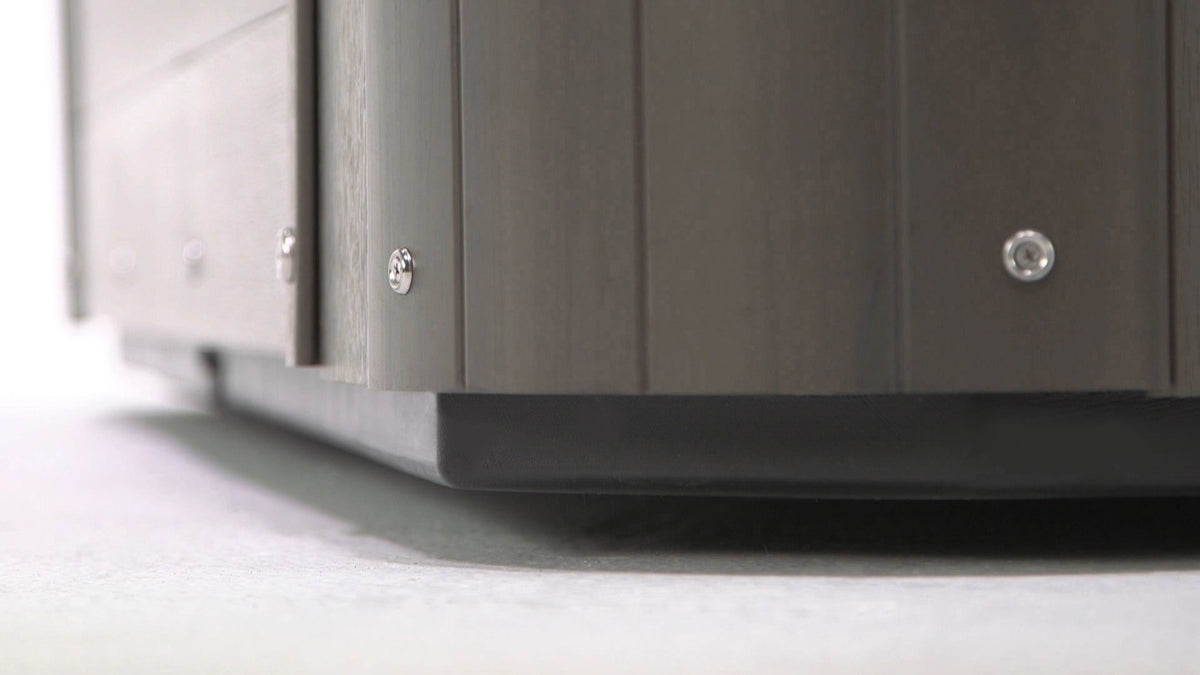
Base design: Does the bottom help isolate the spa from the ground and protect internal components?
-
Insulation: Where and how is insulation installed, and can technicians still access plumbing for service?
-
Plumbing access: Can cabinet panels be removed without dismantling the surrounding patio or deck?
-
Cover construction: Is an insulated, well-fitting cover included, and what does its warranty cover?
Energy use depends on climate, water temperature, spa size, frequency of use, equipment efficiency, insulation, the cover, and local electricity rates. Be cautious with a single operating-cost estimate that does not explain its assumptions.
8. Understand Filtration and Water-Care Features
Every hot tub requires consistent water care. Marketing terms such as ozone, mineral, ultraviolet, or salt systems can make a spa sound maintenance-free, but supplemental systems do not eliminate the need to test, balance, sanitize, filter, and periodically replace the water.
When comparing systems, ask:
-
What sanitizer does the manufacturer recommend?
-
Is a supplemental system included or optional?
-
Which replacement cartridges, bulbs, cells, or parts will it require?
-
How often should filters be cleaned and replaced?
-
Are the correct filters and water-care products easy to obtain?
-
Does the owner’s manual explain the routine clearly?
Choose a system you understand and are willing to maintain. Simple, repeatable water care is more valuable than an impressive feature name.
9. Plan the Site, Delivery, and Installation Before Ordering
A hot tub is only a good fit if it can reach and function in the intended location.
Confirm:
-
The foundation is solid, level, and suitable for the filled weight
-
The delivery route has adequate width, height, and turning clearance
-
Gates, stairs, rooflines, utility lines, and landscaping will not block access
-
The electrical route is practical
-
The cover can open fully
-
Equipment panels remain accessible
-
Water can drain away from the house and spa base
-
Local permits, barriers, setbacks, and electrical rules have been checked
Read the delivery terms closely. “Free delivery” may mean curbside drop-off rather than placement in the backyard. Moving the spa from the curb, crane service, electrical work, foundation preparation, steps, and removal of packaging may be separate costs.
10. Compare the Total Cost of Ownership
The purchase price is only one part of the budget. Before choosing a model, estimate the complete first-year cost and the recurring cost of ownership.
Possible upfront costs
-
Hot tub and selected options
-
Sales tax
-
Delivery beyond standard service
-
Moving or crane service
-
Foundation or deck work
-
Electrical installation
-
Steps, cover lifter, handrail, or storage
-
Initial filters and water-care supplies
Ongoing costs
-
Electricity
-
Sanitizer and balancing products
-
Filters and supplemental-system parts
-
Water replacement
-
Cover replacement over time
-
Service and repairs outside warranty coverage
A less expensive spa is not automatically the lower-cost choice if it lacks an insulated cover, needs more site work, or uses proprietary replacement parts that are difficult to obtain.
11. Review the MyHotTub Warranty for Your Spa
We write and provide the warranties for the hot tubs we manufacture. Because coverage may differ by construction, component, or product line, review the MyHotTub warranty that applies to the spa you are considering.
The warranty document explains the applicable coverage periods, covered components, exclusions, and owner responsibilities. It should be read alongside the spa’s specifications and owner’s manual so you understand the product and its care requirements before installation. If any provision is unclear, contact MyHotTub and we can explain the warranty we provide for that spa.
12. Use Information From the Manufacturer
Because MyHotTub manufactures the spas we sell, our specifications, manuals, warranty documents, and support information come directly from the source.
That direct relationship matters when you need to understand:
-
How the spa was designed and tested
-
Which electrical setup the model requires
-
How the plumbing, pumps, controls, and filtration work together
-
Which filters, covers, and replacement parts are compatible
-
Which owner’s manual and MyHotTub warranty apply to the spa
-
What the delivery service includes
-
How to contact MyHotTub for product or warranty support
Our role continues beyond manufacturing. We provide the product information and support customers need to choose, install, maintain, and enjoy their hot tub with confidence.
Use a Simple Comparison Scorecard
When several models look similar, score each one using the same criteria. Weight the categories based on what matters to you.
| Category | Questions to ask |
| Fit and size | Does it fit the site and the regular users comfortably? |
| Seating | Lounger or open seating? Are seat depths appropriate? |
| Hydrotherapy | Are jets well placed, adjustable, and properly supplied? |
| Electrical | Does 120V or 240V operation fit the intended use and site? |
| Construction | Are the shell, cabinet, base, plumbing, and access thoughtfully designed? |
| Efficiency | What insulation and cover are included? What assumptions support energy claims? |
| Water care | Is the system understandable, serviceable, and affordable to maintain? |
| Installation | What foundation, delivery, moving, and electrical work are required? |
| MyHotTub warranty | Have you reviewed the warranty that applies to this spa? |
| Total cost | What will the spa cost to install and own—not just purchase? |
This turns a confusing feature comparison into a practical decision.
The Best Hot Tub Is the One You Will Enjoy Owning
A hot tub should feel good long after the excitement of delivery day. The right one fits the people who use it, works with the property, provides the kind of massage and seating you prefer, and comes with ownership requirements you understand.
Start with your routine. Confirm the site. Compare the systems behind the visible features. Review the applicable MyHotTub warranty and owner’s manual. Then choose the construction, size, seating layout, and hydrotherapy configuration that makes the fewest compromises on the priorities that matter most.
Explore hot tubs by seating style, capacity, electrical configuration, and features when you are ready to compare options.
Frequently Asked Questions
What should I look for when buying a hot tub?
Start with fit, seating comfort, electrical requirements, jet placement, construction, insulation, cover quality, water-care needs, installation costs, warranty coverage, and after-sale support. Compare total ownership value rather than jet count or purchase price alone.
Is a 120V or 240V hot tub better?
Neither is automatically better. A 120V plug-and-play spa may simplify setup, while a 240V spa may support more pumps and faster heat recovery. The right choice depends on climate, intended use, desired features, and available electrical service.
Is a lounger worth it in a hot tub?
A lounger can be worthwhile for users who prefer reclining and want leg or foot jets. It also uses space that could provide additional upright seating. Body fit and buoyancy affect comfort, so review the seat carefully.
How many hot tub jets do I need?
There is no ideal number. Jet placement, type, adjustability, water flow, pump capacity, and seat alignment matter more than the total count. Choose massage zones that match the areas you want to target.
What costs should I expect beyond the hot tub price?
Possible added costs include delivery beyond curbside, moving or crane service, the foundation, electrical work, steps, a cover lifter, water-care supplies, electricity, filters, and future service. Ask for specifics before ordering.


Share:
How to Know When to Replace Your Hot Tub Cover: 5 Signs
What Is Hot Tub Hydrotherapy?